If you’re searching for reliable standard pillow case covers, this guide highlights top picks designed to protect pillows, extend life, and keep bedding clean. The featured options suit different needs—from lightweight cotton for sensitive skin to durable microfiber with clip-in zippers for easy maintenance. Best for hot sleepers, families with kids, or anyone seeking a breathable, low-noise cover, these picks help you choose the right fit. The quick-reference table below compares key features to help you decide at a glance.
| Product | Material | Size | Zipper | Pieces |
|---|---|---|---|---|
| Niagara Sleep Solution Ultra Soft Pillow Protectors | Microfiber | Standard | Auto-lock zipper | 4 |
| FAUNNA 600TC Cotton Pillow Protectors | 100% Cotton | 20×26 | Silent zipper | 4 |
| Utopia Bedding Set of 2 Pillow Protectors | Polyester Jersey with TPU | 20×26 | Premium zipper | 2 |
| Utopia Bedding Set of 4 Pillow Protectors | Polyester Jersey with TPU | 20×26 | Premium zipper | 4 |
| Amazon Basics 100% Cotton Pillow Protector | Cotton | 27×21 | Full enclose zip | 1 |
Ultra Soft Pillow Protectors with Zipper – Standard Set of 4

Best for: households needing a durable, low-maintenance cover on a budget. These standard pillow protectors use high-thread-count microfiber for longevity and dirt resistance. The auto-lock zipper design minimizes dust intrusion while staying discreet at the back of the pillow.
Why chosen: The 4-pack offers value for families or guest rooms. Machine-washable construction keeps washing simple and maintains a clean appearance over time.
Caution: Microfiber fabrics can retain lint if not cleaned regularly; keep washing frequency aligned with usage to maintain a fresh feel.
FAUNNA 600TC Cotton Pillow Protectors

Best for: sleepers who prefer a natural fiber feel and hypoallergenic properties. These 600-thread-count cotton protectors balance softness with robust protection against wear and tear.
Why chosen: OEKO-TEX certified and designed to be breathable, they help maintain pillow cleanliness with a quiet, hotel-like aesthetic. The hidden zipper ensures a sleek look.
Caution: Cotton 600TC may be heavier than microfiber; consider pillow fill weight if you prefer a lighter cover.
Set of 2 Pillow Protectors with Zipper Standard Size

Best for: travelers or first-time buyers needing a simple, economical option. These standard 20×26 inch protectors wrap pillows securely with a durable zipper.
Why chosen: TPU-coated polyester ensures water resistance and ease of care, while double-hemmed stitching adds durability. The set is ideal for beginners outfitting multiple bedrooms.
Caution: Not suited for memory foam or oversized pillows unless the pillow dimensions match 20×26 inches precisely.
Set of 4 Pillow Protectors with Zipper Standard Size

Best for: households needing multiple pillow covers with consistent performance. This 4-pack mirrors the 20×26 standard size with reliable zipper closure.
Why chosen: Similar build to the 2-pack but provides extra coverage for guest rooms or shared spaces. Durability and ease of washing are benefits, with a clear focus on protecting pillows from daily wear.
Caution: Color and fabric type are identical to the 2-pack; confirm pillow insert size to avoid a tight fit.
Amazon Basics 100% Cotton Pillow Protector
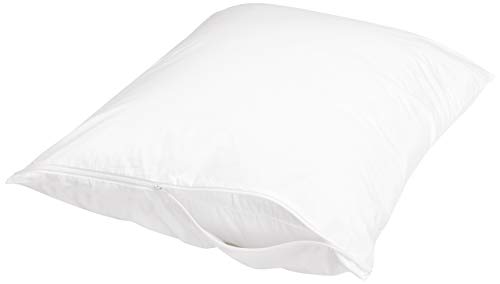
Best for: buyers seeking a simple, hypoallergenic cotton option with a secure enclosure. The breathable weave supports comfortable sleeping conditions.
Why chosen: It combines tight weave with 100% cotton for a clean, traditional look. The full zip enclosure protects against dust and allergens.
Caution: The size listed (27×21) is smaller than standard full pillow sizes; check pillow dimensions before purchasing to ensure a proper fit.
Four Seasons Essentials Standard Pillow Protectors Set

Best for: sleepers needing waterproof protection plus hypoallergenic features. These zippered protectors create a barrier against spills and contaminants.
Why chosen: The 21×27 inch size aligns with common standard pillows, and the waterproof inner lining provides reliable moisture resistance without compromising softness.
Caution: A polyurethane inner lining may alter the pillow’s feel slightly for some users; consider personal preference for texture.
AllerEase Allergy Pillow Protector, 2 Pack

Best for: allergy sufferers seeking enhanced barrier protection without sacrificing pillow feel. These protectors are designed to minimize exposure to household particles.
Why chosen: The zipper enclosure adds a full cover around the pillow, helping to extend pillow life and maintain cleanliness.
Caution: The 2-pack sizing may require pairing with existing pillow sizes; verify pillow dimensions before purchase.
Buying Guide: Standard Pillow Cover Essentials
What material should I look for in standard pillow covers?
Consider fiber type and weave. Cotton provides a soft, breathable feel but may wear with repeated washing. Microfiber offers durability and dirt resistance, often at a lower price. Look for tight weaves and high thread counts for longevity.
Is a zipper necessary?
A zipper helps fully enclose the pillow, protecting against dust and allergens. Auto-lock or premium zippers prevent snagging and keep the cover neat when not in use.
What size should I buy?
Standard pillows typically measure about 20×26 inches. Always verify the measurements of both pillow and protector to avoid a loose or tight fit that compromises protection or comfort.
Are waterproof covers important?
Waterproof protection is useful for households with kids or pets or for spill-prone areas. TPU or polyurethane linings block liquids while maintaining comfort and breathability.
How many covers do I need?
For a family or guest room, aim for at least two to four pillow protectors per bed to handle regular washing cycles. Having more covers reduces the need to wash during short occupancy periods.
Care and longevity considerations
Choose machine-washable protectors to simplify care. Dry on low heat or air dry when possible to prevent fabric wear. Inspect zippers and seams regularly to ensure ongoing protection.
Frequently Asked Questions
- Are pillow protectors and pillowcases the same? Pillow protectors encase the pillow itself to block dust, allergens, and spills, while pillowcases cover the pillow for comfort and style.
- Do pillow protectors affect pillow softness? Some protectors can add a subtle texture; cotton and microfiber options aim to preserve the pillow’s natural feel.
- How often should I wash pillow protectors? Wash them as often as you wash pillowcases—typically every 1–2 weeks, or sooner if you have allergies or spills.
- Can pillow protectors extend pillow life? Yes, they shield pillows from dirt, oils, and wear, helping maintain loft and cleanliness over time.
- What’s the difference between waterproof and water-resistant protectors? Waterproof protectors block liquids completely with an inner lining, while water-resistant options slow liquid penetration but may not prevent leaks completely.
- Should I choose hypoallergenic protectors? If you’re sensitive to dust or have allergies, hypoallergenic fabrics reduce allergen exposure and can improve sleep quality.