When choosing pool paint, the right product depends on your pool surface, climate, and maintenance habits. This guide highlights five highly-matched options for plaster, fiberglass, steel, and aluminum pools, with emphasis on ease of use, durability, and finish quality. Whether you want a durable epoxy one-coat solution or a flexible waterborne acrylic, these picks cover a range of needs—from DIY homeowners to seasonal pool refreshers. The following summary helps you compare quickly and decide which product fits your pool and budget the best.
| Product | Finish Type | Best For | Key Benefit |
|---|---|---|---|
| Olympic Zeron Bikini Blue (1 Gal) | Two-part epoxy | Plaster, fiberglass, steel, aluminum | One-coat durability with catalyst-accelerated curing |
| Olympic Zeron White (1 Gal) | Two-part epoxy | Plaster, fiberglass, steel, aluminum | Bright, clean finish in one coat |
| INSL-X Ocean Blue | Waterborne acrylic | Fresh or saltwater pools | Quick-drying, flexible water-based option |
| Dyco Ocean Blue (1 Gal) | Waterborne acrylic | Concrete, plaster, masonry | Resistant to UV, chemical exposure, hairline cracks |
| Dyco Ocean Blue (5 Gal) | Waterborne acrylic | Larger projects | Long-lasting, scalable for bigger areas |
Olympic Zeron Bikini Blue 1 Gallon (Two-Part Epoxy)

The Bikini Blue variant is a two-part epoxy pool paint designed for plaster, fiberglass, steel, and aluminum surfaces. The base gallon is short-filled to allow room for catalyst, and the finish yields approximately 125–150 square feet per gallon. Best for buyers who want a strong, single-coat epoxy finish and are prepared for proper mixing and timely use to prevent hardening. This option is particularly suitable for DIYers who want durable, long-lasting color with a single coating when surfaces are properly prepared.
Who it’s best for: Pool owners seeking a robust epoxy solution that can deliver a hard-wearing, one-coat finish on multiple substrate types.
Why selected: It combines a clear two-part system with a practical coverage range and a straightforward one-coat promise when applied correctly, making it a strong all-around option for durable pool surfaces.
Caution: Thorough mixing and timely use are essential; delays can cause the catalyst to lose effectiveness and the mix to harden prematurely.
Olympic Zeron White 1 Gallon (Two-Part Epoxy)

This White variant offers the same two-part epoxy system as the Bikini Blue, designed for plaster, fiberglass, steel, and aluminum pools. Like the blue version, it uses a base gallon and catalyst, with a final coverage of about 125–150 square feet per gallon. Best for buyers who want a crisp, bright white finish that helps reflect heat and keep water looking sparkling. The key drawback is the same: precise mixing and timing are critical to prevent premature hardening.
Who it’s best for: Pool owners wanting a bright, clean white finish with epoxy durability on multiple pool surfaces.
Why selected: The white finish provides high visibility and a classic look, pairing well with diverse water colors and surroundings.
Caution: Ensure complete mixing and swift application to avoid catalyst misfire and cured material that can hinder adhesion.
INSL-X Ocean Blue Waterborne Pool Paint
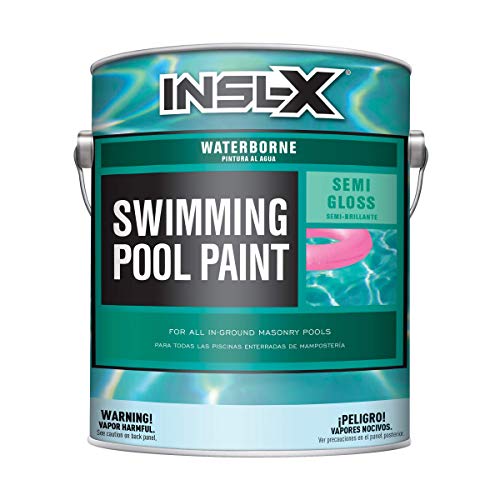
INSL-X offers a waterborne acrylic pool paint in Ocean Blue. It is suitable for fresh or saltwater pools and dries quickly, providing a flexible, water-based option that reduces strong chemical odors and long curing times. Best for buyers who prefer a more eco-friendly, easy-to-cleanup paint with decent UV resistance. The finish is suitable for concrete, plaster, or masonry surfaces commonly found in residential pools.
Who it’s best for: Homeowners seeking a quick-drying, water-based finish with lower odor and simpler cleanup.
Why selected: Its quick-drying profile makes it practical for projects with tight timelines and frequent usage between coats or touchups.
Caution: While durable, waterborne acrylics may require more frequent maintenance in extremely sunny or chemically aggressive environments compared to epoxy systems.
Dyco Ocean Blue Waterborne Pool Paint (1 Gal)

Dyco’s Ocean Blue waterborne acrylic pool paint is designed to deliver a tile-like finish on concrete, plaster, or masonry surfaces. It is engineered to resist UV exposure, fading, peeling, cracking, staining, water, salt, and chemicals, and can be used to seal hairline cracks. Best for buyers seeking a durable, water-based option that maintains color integrity in challenging environments.
Who it’s best for: Pool owners prioritizing long-lasting color and resistance to harsh pool chemicals and weathering.
Why selected: The product emphasizes resistance to a wide range of stressors, including hairline crack sealing, which helps maintain a smooth pool surface over time.
Caution: As with waterborne paints, proper surface preparation is critical to maximize adhesion and longevity.
Dyco Ocean Blue Waterborne Pool Paint (5 Gal)

Dyco’s 5-gallon option extends the same waterborne acrylic technology to larger projects. It shares the durability traits of the 1-gallon variant, including UV and chemical resistance, with the added benefit of cost efficiency for bigger areas. Best for buyers refurbishing expansive pools or multiple sections of a large pool deck.
Who it’s best for: Larger pool installations or projects with tighter per-gallon coverage requirements, where the cost-per-square-foot matters.
Why selected: It provides scalable coverage without compromising the paint’s listed advantages, making it suitable for bigger spaces.
Caution: Ensure accurate surface preparation and matching of application conditions across the larger area to prevent color inconsistencies.
Buying Guide: Pool Paint Buyer’s Considerations
What surface will you paint? Epoxy paints tend to adhere well to plaster, fiberglass, steel, and aluminum when properly prepared. Waterborne acrylics work well on concrete, plaster, and masonry but may require more frequent maintenance in aggressive environments.
Do you prefer one-coat durability or a flexible, easy-to-apply product? Two-part epoxy options can offer strong, single-coat durability with proper mixing, while waterborne acrylics offer easier cleanup and lower odor with longer cure times.
What climate and pool chemistry apply to your project? Epoxies resist chemical exposure but require careful timing, while waterborne paints are generally more forgiving during application but may fade faster under intense UV exposure.
What is your pool size and budget? Larger areas favor paints sold in 5-gallon quantities for economic coverage, while smaller pools may be cost-efficient with 1-gallon units when planning touchups.
How important is color stability and finish? White finishes reflect heat and look brighter, while blues offer a more traditional pool-water hue. UV resistance and crack-sealing capabilities impact long-term aesthetics and maintenance.
Surface preparation steps matter: clean, dry, and lightly abrade surfaces to maximize adhesion; fill and cure cracks or gaps before painting; and follow mixing instructions precisely to ensure product performance.
FAQ
- Q: Which type of pool paint lasts longer, epoxy or waterborne? A: Epoxy paints typically offer longer-lasting durability and fewer maintenance cycles when properly applied, but require careful preparation and mixing.
- Q: Can I use waterborne paint on a previously painted pool? A: Yes, but you should verify surface compatibility and proper adhesion; sanding and cleaning recommendations vary by product.
- Q: Do these paints require a primer? A: Some epoxy systems may not require a separate primer if the surface is well-prepared, but always follow product-specific instructions.
- Q: Is white pool paint more reflective and cooler than blue? A: White finishes can reflect more light and may stay cooler, while blue tones provide traditional pool aesthetics; both are acceptable on suitable surfaces.
- Q: Can I apply pool paint over existing coatings? A: It depends on the existing coating and surface; proper sanding, cleaning, and compatibility checks are essential.
- Q: How soon can I refill the pool after painting? A: Cure and readiness vary by product; consult the product’s directions for dry-to-touch and full-cure times before refilling.