Looking for a reliable, low-watt night light that won’t disturb your sleep or drain energy? This guide highlights five compact, energy-efficient options ideal for bedrooms, nurseries, bathrooms, and hallways. Each pick uses minimal power while delivering gentle, welcoming illumination. Best for: adults who want subtle guidance at night, parents seeking soothing lights for kids’ rooms, and households prioritizing dusk-to-dawn efficiency.
| Product | Brand | Key Benefit |
|---|---|---|
| L LOHAS LED Night Lights Plug into Wall 2-Pack | L LOHAS LED | Consistent dusk-to-dawn glow, 0.3W per light |
| TORANKOS 2 Pack Very Dim Sleep Night Lights | TORANKOS | Three color temps, five brightness levels |
| YUNLEX 2 Pack Amber Night Light | YUNLEX | Warm amber glow, layered diffusion |
| Uigos LED Night Light Lamp | Uigos | Smart dusk-to-dawn, 0.5W, 6-pack option |
| JandCase Night Lights Plug into Wall 2Pack | JandCase | Soft 3000K light, compact design |
L LOHAS LED Night Lights Plug into Wall 2-Pack

Best for: small spaces and hallways where a discreet glow is enough for safe navigation. These plug-in lights operate with a dusk-to-dawn sensor, auto-on at night and auto-off by day. Each unit uses only 0.3 watts and outputs approximately 40 lumens at 3000K soft white.
Why selected: energy efficiency is strong, with automatic brightness responsive to ambient light. The lights are compact and won’t block the second outlet. Suitable for bedrooms and entryways where a gentle guide light is preferable.
Caution: the 0.3W level is intentionally soft; in very dark rooms they may be subtle and not ideal for detailed tasks.
TORANKOS 2 Pack Very Dim Sleep Night Lights

Best for: bedrooms and nurseries where light quality matters for sleep. Features include a back-positioned light source to minimize disruption, 610nm zero-blue-light LEDs, and three color temperatures. Five dimmable levels allow tailored brightness to comfort.
Why selected: the low-blue-light design supports restful sleep, and the adjustable brightness helps accommodate different night routines. It’s a solid choice when you want a soft, non-intrusive glow.
Caution: feature-rich options may require more setup than single-intensity lights; ensure dimming aligns with your sleep schedule.
YUNLEX Amber Night Light Plug into Wall

Best for: nurseries and kids’ rooms needing a cozy, non-glaring glow. The light offers an adjustable three-level brightness and a unique dual-layer diffusion that hides LEDs for a soft amber glow.
Why selected: the warm amber hue promotes a calm environment and helps kids feel secure. Dusk-to-dawn sensing adds hands-free convenience for families with varying schedules.
Caution: amber tones are visually distinct; if you need brighter white illumination for reading or safety checks, this may be too soft.
Uigos LED Night Light Lamp with Smart Sensor
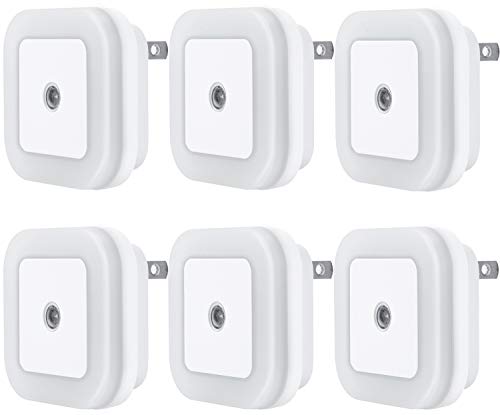
Best for: households needing a scalable solution with multiple units. The 0.5W light is moderate in brightness and uses a sensitive dusk-to-dawn sensor. A 6-pack option supports full-home coverage.
Why selected: energy efficiency paired with automatic operation makes it practical for long-term nightly use. The built-in sensor ensures the light only runs when needed.
Caution: 0.5W is still a gentle glow; in very bright rooms you may require a brighter alternative for visibility.
JandCase Night Lights Plug into Wall 2Pack

Best for: bathrooms and hallways where a compact, modern design matters. The 3000K soft light provides comfortable illumination, and the auto on/off sensor eliminates manual switching.
Why selected: compact size helps avoid outlet blockage while maintaining an unobtrusive presence. The soft glow supports nighttime navigation without harsh glare.
Caution: the small form factor may not satisfy needs for brighter nighttime visibility in larger rooms.
Buying Guide: Low-Watt Night Lights
- Power and brightness: Look for lights in the 0.3W–0.5W range for minimal energy use, with output around 30–50 lumens for a soft glow.
- Sensor behavior: Dusk-to-dawn sensors save energy but ensure the fixture activates reliably in your room’s ambient light.
- Color temperature: Choose warm white (2700K–3000K) for bedrooms and nurseries; neutral white (3500K–4000K) can aid in hallways and kitchens.
- Diffusion and glare: Prefer lights with diffused covers to avoid direct glare and “hot spots,” especially for children.
- Size and outlet usage: If space is tight, select compact, two-pack options that don’t block the second outlet.
- Durability and lifecycle: Long-life LEDs reduce replacement frequency; verify power draw and warranty terms where available.
Frequently Asked Questions
- What is a low-watt night light best for?
– Safe navigation at night with minimal energy usage, and to support sleep-friendly environments. - Do dusk-to-dawn sensors save energy?
– Yes, they turn lights on only when ambient light is low, reducing unnecessary usage. - Is warmer light better for sleep?
– Warmer tones (around 2700–3000K) are generally easier on the eyes at night and less disruptive to sleep cycles. - Should I buy multiple lights for a room?
– For larger spaces or long hallways, multiple lights can provide even illumination without glare. - Can these lights be used in nurseries?
– Yes, amber and warm white options are often preferred for soothing environments for babies and toddlers.