Answering the question most parents have: which kids night light clock best helps with bedtime and wake-up routines? This guide highlights five top options designed for toddlers to early school-age children. Each clock uses friendly visuals, color cues, or soothing sounds to teach time and support healthy sleep habits. Suitable buyers include parents seeking gentle wake-up signals, night lighting that won’t disrupt sleep, and simple interfaces for kids and caregivers alike.
Summary of Selected Products
- ANNNGUL Kids Alarm Clock — Ok to Wake with green/red light, simple, toddler-friendly.
- LittleHippo Mella — Sleep trainer with color cues and built-in lullabies.
- iHoo Toddlers Sleep Training Clock — Sun/Moon cues, alarms, and sounds.
- Netzu Cute Digital Clock — Night light, snooze, child lock, practical for daily routines.
- Dreamegg Sound Machine Baby — Night light, sleep routine features, multiple ambient sounds.
ANNNGUL Kids Alarm Clock

Best for toddlers who need a straightforward wake-up signal. The OK TO WAKE concept uses green and red lights to indicate when to stay in bed or rise. The clock also offers a dimmable night light with multiple color options and a simple, intuitive face layout. Important: the green/red system may require a brief explanation for very young children learning time concepts.
LittleHippo Mella: Sleep Trainer
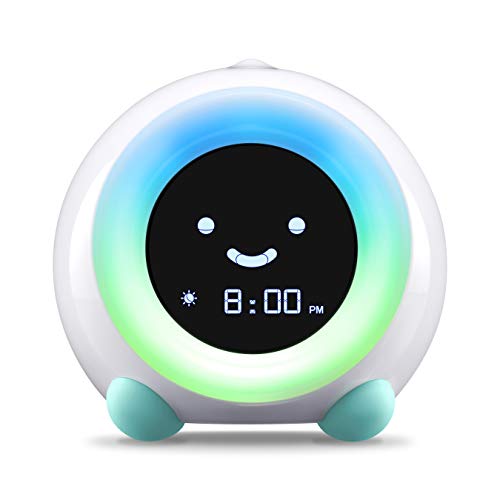
Best for gradual wake-up routines and sleep coaching across ages. Mella uses color cues and facial expressions to indicate bedtimes and wake times, with a yellow cue before wake-up and green when it’s time. It also doubles as a light and sound machine, expanding its usefulness as children grow. Limitation: multiple features require setup and some parents may want to disable sounds for very early bedtimes.
iHoo Toddlers Sleep Training Clock

Best for younger children who respond to sun/moon visual cues. iHoo uses day/night indicators (green for wake, red for sleep) and includes soothing sounds plus an optional timer. It’s chosen for its clear, time-based teaching method and simple operation. Caution: some users may prefer fewer sounds or a higher volume ceiling depending on the child’s sensitivity to audio.
Netzu Cute Digital Clock

Best for families wanting a compact, kid-friendly UI with practical features. Netzu emphasizes a 5-level brightness night light, 10 ringtones with a snooze function, and a child-lock to protect settings. It’s well-suited for kids who benefit from a dedicated bedtime routine and a simple wake-up alarm. Limitation: the display brightness and size are modest, which may be less ideal for visually impaired users.
Dreamegg Sound Machine Baby

Best for a combined sleep environment solution. Dreamegg blends sleep sounds, a night light with multiple modes, and an ok-to-wake alarm clock to help establish consistent routines. It’s a strong pick for rooms where white noise or nature sounds support sleep. Limitation: the breadth of features may require more setup and parental monitoring to keep routines on track.
Buying Guide: Key Considerations for Choosing a Kids Night Light Clock
- Learning style: Do you want color cues (green/red), sun/moon indicators, or an interactive display? Choose based on how your child responds to visuals.
- Light and sound levels: Look for adjustable brightness and volume controls to prevent sleep disruption and support gradual waking.
- Ease of use: Prioritize clocks with simple layouts and clearly labeled buttons to minimize morning struggles.
- Size and visibility: Large digits help children read the time; consider the room’s size and clock placement.
- Safety and durability: A design that’s sturdy for kids, with secure power options and child-safe materials.
- Future-proof features: Some clocks grow with your child, offering lullabies, timers, and multiple color or light modes.
Frequently Asked Questions
- What is an OK-to-Wake clock? It signals children when it’s time to wake up, usually with green or a specific color cue, to reduce early rising.
- Are night lights important for sleep training? A soft night light can improve comfort without keeping kids awake. Brightness should be adjustable.
- Should I choose a clock with sounds? Sounds can help, but vary by child. Start with gentle options and lower volumes to avoid overstimulation.
- How long should a sleep training clock be used? Many families continue using it for several months, adjusting cues as routines become established.
- Is a bigger display always better for kids? Larger digits aid readability, especially for kids just learning to tell time.
- Can these clocks replace bedtime routines? They support routines but work best when paired with consistent bedtimes and calming activities.