Answering your search for reliable foam hand wash dispensers, this guide highlights five top options that balance style, capacity, and practicality. Ideal buyers: households seeking stylish, durable bottles; small businesses needing practical, economical choices; and DIY enthusiasts who want customizable soap solutions. Below is a quick comparison table of the selected products followed by detailed sections.
| Product | Capacity | Material | Best For |
|---|---|---|---|
| BRIGHTFROM Foaming Soap Dispenser Pack | 8 oz each | Plastic | DIY blends, eco-conscious homes |
| MALACHI Foaming Hand Soap Dispenser | Varies (refillable) | Glass | Elegant bathroom or kitchen displays |
| Ceramic Foaming Soap Dispenser (Dlirho) | 12 oz | Ceramic | Premium bathroom decor |
| Ginger Lily Farms Foaming Soap Dispenser | 15 oz | Plastic | Clear visibility, eco-friendly use |
| zuxzmj Blue Glass Foaming Hand Soap Dispenser | 13.5 oz | Glass | Stylish, high-traffic areas |
BRIGHTFROM Foaming Dispenser Pair

Best for DIY enthusiasts and light commercial use, these BPA-free 8 oz bottles are transparent to show homemade blends. They encourage economical soap use by enabling a 1:4–1:5 dilution ratio to produce rich foam. The clear plastic design helps monitor remaining product easily, supporting predictable refills. Caution: avoid exposing to high heat; ensure the pump remains clean to prevent clogs. Selected for households prioritizing customizable solutions and simple refilling, as well as small offices running on cost-conscious soap usage.
MALACHI Foaming Hand Soap Dispenser

Best for elegant bathroom or kitchen displays, this refillable clear glass pump bottle offers a premium look with a diamond pattern and wide visibility of soap levels. It uses a rust-resistant pump and aims for consistent foaming when refilled at the recommended 1:3 ratio. Limitation: avoid hot liquids above 40°C to prevent pump damage. Chosen for users who want a stylish, high-end dispenser that keeps hands and spaces looking refined while supporting busy homes or light commercial use.
Dlirho Ceramic 12 oz Foam Dispenser

Best for modern decor and durable daily use, this ceramic dispenser is lead-free and rust-resistant. The wide mouth design ensures easy refilling with minimal waste, and a silicone ring on the pump head helps seal the ceramic body to avoid oxidation of the lotion. Choose this if you want a tactile, decorative piece that remains functional in high-traffic bathrooms or powder rooms. Limitation: ceramic can be heavier and more prone to chipping if mishandled.
UUJOLY 450ml Foaming Dispenser Duo
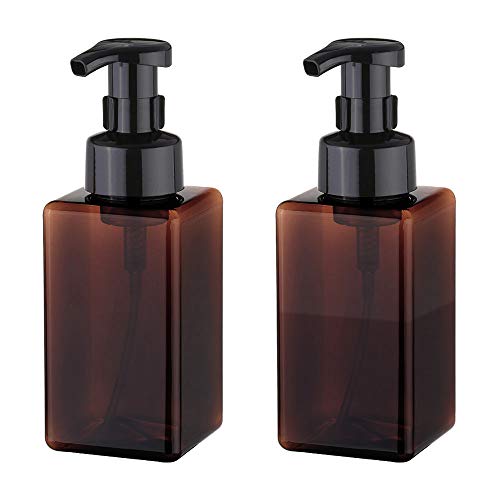
Best for households seeking a cost-effective, larger-capacity option with two bottles included. The PETG plastic is designed to be durable and refillable, enabling a 1:3–1:5 dilution to generate ample foam and extend soap usage. Caution: avoid overfilling and ensure the pump head remains intact to prevent leaks. Selected for bulk-buy scenarios, shared bathrooms, or small commercial setups where two reliable dispensers are desirable.
Ginger Lily Farms Foaming Dispenser Pair

Best for clear visibility and eco-friendly use, these 15 oz transparent bottles are BPA-free and designed to minimize plastic waste through refilling instead of replacement. They support easy monitoring of remaining soap volume, with a simple refill process that fits most kitchen or bathroom setups. Limitation: larger size may be less convenient for very small spaces. Chosen for users wanting straightforward refilling and a strong, eco-conscious appearance.
Buying Guide
What capacity should I choose?
Consider how often you refill and how many people use the dispenser. Smaller 8 oz bottles are ideal for powder rooms or guest bathrooms, while 12–15 oz options suit busy households and commercial spaces with higher throughput.
Glass vs. plastic vs. ceramic
Glass provides a premium look and easy monitoring but can break if mishandled. Ceramic adds decor appeal and durability against rust, while high-density plastic offers lightweight, shatter-resistant practicality and lower cost. PETG plastic balances durability with clarity for easy monitoring.
Foam performance and dilution
Most dispensers require you to dilute liquid soap with water to create foam. Typical ratios are around 1:3 to 1:5. Follow the manufacturer’s guidance to prevent clogs and ensure consistent foam quality.
Durability and maintenance
Look for rust-resistant pumps, wide-mouth refills, and seals that prevent leaks. A pump head designed to avoid clogging reduces maintenance time and keeps the dispenser usable longer.
Design and space considerations
Choose a form factor that complements your sink area. Clear or light-colored bottles show soap levels, while colored glass or patterned ceramics can serve as focal decor pieces in powder rooms or commercial lobbies.
Practical buying tips
- Prefer BPA-free plastics for safety and environmental reasons.
- Verify the pump material and seal quality to minimize leaks.
- Check if the set includes multiple bottles if you want uniform styling across spaces.
FAQ
- What is the benefit of a foaming dispenser versus a regular liquid soap bottle?
A: Foam dispensers use less soap per wash, extending the amount of product and reducing waste when used with proper dilution. - Are foam dispensers easy to refill?
A: Most are designed with wide mouths for easy pouring and refills, though glass models may be heavier to handle. - Is glass safe for kitchen sinks?
A: Yes, glass dispensers are safe in kitchens, but handle carefully to avoid breakage in busy spaces. - Can I use any hand soap in a foam dispenser?
A: It’s best to follow the product’s dilution guidelines. Some soaps are too thick and may clog pumps if not diluted properly. - Do these dispensers prevent leaks?
A: Reputable models include tight seals and leak-resistant pumps, but avoid overfilling and check seals regularly. - How should I maintain the pump to prevent clogs?
A: Rinse with warm water and occasionally operate the pump to clear residues, especially after using thicker formulas.