Answer: A cork board on the wall is ideal for quick, message-friendly organization in homes and small offices. The best options balance durability, finish, and ease of installation. This guide highlights five top picks suitable for pinning notes, photos, and reminders, with clear distinctions on who benefits most from each choice.
| Product | Size / Type | Best For | Why It Stands Out |
|---|---|---|---|
| DOLLAR BOSS Double-Sided Bulletin Boards | 16″ x 12″ Linen | Small desks, kitchen nooks, personal desks | Double-sided, self-healing linen surface; easy wall mounting; stylish frame. |
| Fluxynara Felt Bulletin Board (Large) | 48″ x 36″ Felt Tiles | Open wall spaces, classrooms, creative studios | Tile system for customizable layouts and large display area. |
| OWLKELA Linen Cork Bulletin Board | 24″ x 36″ Linen with White Frame | Home offices and living spaces | Elevated linen surface with a clean, modern frame. |
| BGJRBY 2 Pack Cork Board | 15.7″ x 11.81″ with Oak Finish | Compact spaces, classrooms, entryways | Two boards for flexible layouts and orientation. |
| Lifewit Felt Bulletin Board (6-Pack) | 36″ x 24″ total with 6 tiles | Collaborative spaces, multi-note walls | Self-adhesive felt tiles for easy, drill-free installation. |
DOLLAR BOSS Double-Sided Linen Bulletin Board

The DOLLAR BOSS board features reversible self-healing linen surfaces, offering a durable alternative to standard cork. Best for small workspaces or desks, it doubles display area while reducing pin marks. The white-patterned wood frame adds a touch of style to homes, kitchens, or offices. It ships with pre-drilled holes, a hemp rope, pins, and clips for flexible hanging. A potential limitation is the smaller size, which may require more frequent updates for busy workstreams.
Fluxynara 48″ x 36″ Felt Bulletin Board

The Fluxynara felt tile system enables large, configurable displays in open spaces. With 12 tiles, users can arrange a shape or size that fits a wall, classroom, or studio. Tiles are made from dense felt and come with adhesive tabs for damage-free mounting. This option is best for users who want a custom layout and a big board, but it requires planning to ensure wall compatibility with the adhesive system.
OWLKELA Linen Cork Bulletin Board

This 24″ x 36″ cork board combines a linen surface with a white frame for a refined look. The linen surface helps pins stay in place while offering a softer visual appeal than plain cork. It’s well-suited for home offices, study rooms, or living areas where aesthetics matter. A limitation is that larger boards may require sturdy wall mounting and proper anchor selection to prevent sag over time.
BGJRBY 2 Pack Cork Board

These 15.7″ x 11.81″ cork boards suit smaller spaces and offer orientation flexibility with a natural cork surface and back support. They are described as self-healing and sturdy, making them practical for notes, schedules, or student work. Choose this if you need multiple boards in a compact footprint, but beware of edge wear with heavy pin usage over time.
Lifewit Felt Bulletin Board (6-Pack)
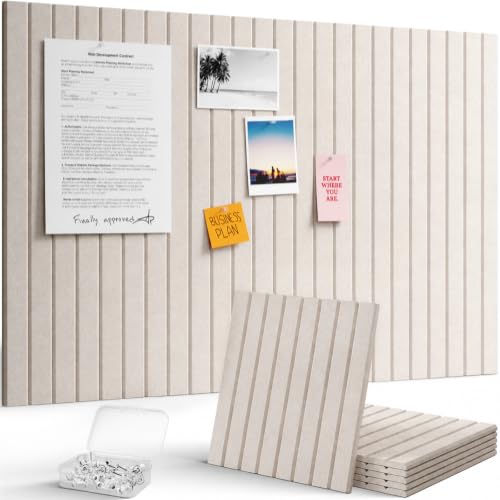
Designed as a modular, self-adhesive system, Lifewit tiles offer flexible layouts and quick installation without nails. This setup is ideal for team spaces or classrooms that require easy reconfiguration. A caution is that strong adhesive might affect wall surface compatibility, so test a small area first.
Buying Guide
What size do I need for my wall?
Measure wall space and consider whether you want a single large board, multiple smaller boards, or a modular tile approach. Large layouts create a focal wall, while smaller boards fit entryways or desks.
Which surface type matches my needs?
Felt tiles offer a soft, customizable look and good pin retention when configuring layouts. Linen cork blends aesthetics with practical hold. Cork boards are reliable for everyday notes, while hybrids mix both materials for style and function.
What mounting method suits my wall?
Good options include pre-drilled holes with hardware, self-adhesive backings, or modular tile systems. Consider wall material (painted drywall, concrete, or wood) and choose anchors rated for weight and load.
Durability and maintenance considerations
Self-healing surfaces extend life under frequent pinning. Adhesive-backed tiles simplify removal but may require reapplication if removing from porous walls. A frame or border can protect edges and enhance longevity.
Best use cases by scenario
Home workspace: compact boards or a linen cork board for a tidy look. Small offices benefit from modular or twin boards to separate categories. Classrooms or studios gain value from large felt tile systems for flexible displays.
Safety, installation, and long-term care
Check weight limits for pins and clips. Use appropriate wall anchors and avoid heavy loads on delicate wallpaper. Periodically inspect edges for wear and replace damaged tiles or cork sheets to maintain performance.
FAQ
Can I mount these boards without nails?
Yes. Some products use self-adhesive backing or mounting hardware designed for tool-free installation. Always verify wall compatibility before applying adhesive.
Are linen or felt surfaces better for daily use?
Felt surfaces are highly versatile for large layouts and dynamic displays. Linen surfaces offer a refined look with strong pin retention and durability in lighter use cases.
How do I extend the life of a cork board?
Avoid over-pinning and use pins appropriate for cork density. Rotate pins to prevent deep holes and consider self-healing surfaces when available.
What should I consider before buying a modular tile system?
Check compatibility with wall type, adhesive strength, and the ability to reconfigure. Ensure tiles can be removed cleanly without damaging the wall.
Which option is best for a shared classroom?
A large felt tile system or multiple cork boards arranged in a grid provides ample space for multiple subjects, while remaining easy to reconfigure for lessons.