Clear, purified water is essential for daily hydration, cooking, and beverage prep. This guide highlights five reliable clean water filter pitchers, each suited to different needs—from small households to family use. You’ll see who each pitcher is best for, why it stands out, and any practical caveats.
| Product | Capacity | Best For | Why It Stands Out |
|---|---|---|---|
| ZeroWater 10-Cup Pitcher | 10 cups | Homes needing precise TDS monitoring | 5-stage filtration with a TDS meter for when to replace the filter |
| Brita Large 10 Cup Pitcher | 10 cups | Budget-conscious families | Easy refills, space-efficient for fridges, daily cost savings |
| Clearly Filtered Water Filter Pitcher | 80 oz (10 cups) | Families seeking broad contaminant protection | NSF-certified, targets 386+ contaminants |
| Waterdrop PT-72W Glass Pitcher | 7 cups | Eco-friendly, glass aesthetic | Glass body with 5-stage filtration, note on TDS |
| PUR 7-Cup Pitcher | 7 cups | Simple, trusted filtration | NSF-certified filtration with 2-in-1 technology |
Short buying tips: prioritize capacity for your household, look for NSF or equivalent certifications for contaminant reduction, and consider whether you need a TDS meter or a glass body for eco-friendliness. The following sections explain each option in detail to help you compare at a glance.
ZeroWater 10-Cup Pitcher With TDS Meter
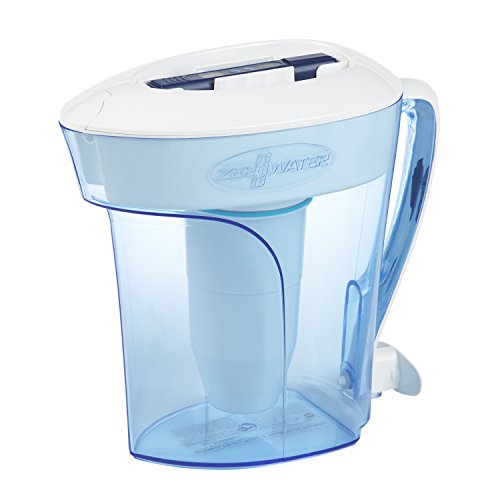
The ZeroWater 10-Cup Pitcher uses a 5-stage ion exchange filter designed to reduce dissolved solids (TDS). It includes a built-in TDS meter to indicate when to replace the filter, helping you monitor water purity. Best for buyers who want numeric feedback on water quality and want to minimize total dissolved solids.
Best for: homes that value precise TDS tracking and thorough filtration. Limitations: TDS readings reflect dissolved solids but not every contaminant; filter changes depend on usage and water quality.
Brita Large 10 Cup Water Filter Pitcher

This BPA-free pitcher holds up to 10 cups and includes a replacement filter. It is designed for easy filling, compact storage, and lower waste by reducing bottled-water use. Best for: budget-conscious households seeking convenient, everyday filtration with fridge-friendly dimensions.
Limitation: Some users may prefer higher contaminant coverage beyond basic chlorine and taste improvements; order filters separately as needed.
Clearly Filtered 10 Cup Pitcher

Clearly Filtered uses a filtration system backed by NSF certification and targets a broad range of contaminants, including fluoride, PFAS/PFOA, lead, chlorine, and microplastics. An 80-ounce capacity fits about 10 cups per fill and is designed to sit on standard refrigerator shelves.
Best for: households seeking extensive contaminant protection without sacrificing mineral retention. Caution: price and filter replacement costs may be higher than standard pitchers.
Waterdrop PT-72W Glass Water Filter Pitcher

This 7-cup glass pitcher emphasizes an eco-friendly design with a glass body and a sturdy inner liner. It uses a 5-stage filtration system to reduce chlorine, metals, and contaminants, though it does not lower total dissolved solids (TDS).
Best for: buyers who prefer a glass container and eco-conscious materials. Limitation: does not reduce TDS; confirm compatible filters (PF01A-P or ASIN B0D6Y4W9Q1) before ordering.
PUR 7-Cup Water Filter Pitcher

The PUR pitcher includes a genuine PUR filter and uses advanced 2-in-1 filtration to reduce microplastics, chlorine, and other substances. It has a compact, fridge-friendly design with dishwasher-safe parts for easy cleaning.
Best for: busy homes needing reliable filtration with simple maintenance. Caution: some users may want broader contaminant removal beyond basic taste and odor improvements.
Buying Guide
Capacity and household size: Choose 7- or 10-cup pitchers based on how many people drink filtered water daily and available fridge space.
Filtration targets: If you need broad contaminant removal (lead, PFAS, arsenic, microplastics), consider Clearly Filtered or similar models with certification coverage.
Certifications: NSF or equivalent certifications indicate tested performance for specific contaminants. Verify what is reduced and by how much.
Material and design: Glass bodies appeal to eco-minded buyers and kitchen aesthetics, while BPA-free plastics save weight and cost. TDS meters add tracking but are not universal indicators of all contaminants.
Maintenance: Consider filter replacement frequency, price, and ease of replacement. Some pitchers offer easy-fill lids and dishwasher-safe components for convenience.
FAQ
- Are all these pitchers NSF-certified? Some are, and others reference broad contaminant claims. Check each product page for current certification status.
- Do these pitchers reduce total dissolved solids (TDS)? Not all models reduce TDS. If TDS reduction is important, verify the product specifies this feature.
- Is glass safer than plastic for daily use? Glass reduces potential chemical leaching and is more eco-friendly for some users, but it’s heavier and can break.
- How often should I replace the filters? Replacement frequency depends on usage and water quality. Follow the manufacturer’s guidance and monitor any built-in indicators when available.
- Can I fit these in a standard refrigerator? Most models are designed to fit standard refrigerator shelves, but check dimensions to ensure a proper fit.
- Which pitcher is best for a large family? A high-capacity pitcher with broad contaminant coverage, such as Clearly Filtered, is often suitable for families needing ample filtered water.