Whether you’re shopping for an elderly loved one, someone with limited mobility, or you’re recovering from surgery, the right sock aid can restore independence and reduce strain. This guide highlights five reliable options tailored for regular socks (not compression socks) and explains who benefits most from each design. Use the product notes to compare fit, ease of use, and portability. A quick buyer’s table is included to summarize key points for fast decisions.
| Product | Best For | Key Benefit |
|---|---|---|
| RMS Deluxe Sock Aid | Seniors, homecare users | Flexible shell and easy insert |
| Easy Sock Ox Adjustable Sock Aid | Travelers, high mobility needs | 3 adjustable lengths, collapsible |
| CAidRE Sock Aid | Active seniors, post-surgery | Wide lip, non-slip foam pad |
| KEKOY Sock Aid | People with limited bending | 4″ foot width, simple design |
| Vive Sock Aid | Recovery and limited mobility | Foam handles, slip-resistant cuff |
RMS Deluxe Sock Aid – Socks Helper

The RMS Deluxe Sock Aid uses a flexible contoured plastic shell designed for regular socks, not suitable for compression hosiery. It supports foot widths up to about 5 inches. Best for users who need a gentle, adaptable form that reduces hand strain and favors easy sock insertion. It’s particularly suited to those with weak grip or limited mobility who want to put on ankle to knee socks independently. A potential limitation is its non-use with very thin hosiery, which could affect some wardrobe choices.
Easy Sock Ox Adjustable Sock Aid
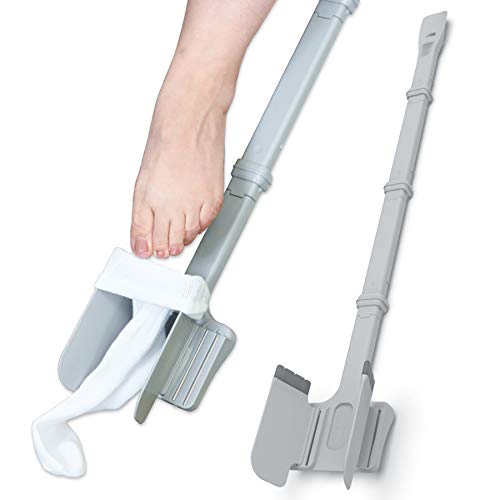
The Easy Sock Ox is designed for pain-free use and simple setup, with extendable length up to 36 inches and adjustable settings for different heights. It’s collapsible for travel and storage, making it a strong choice for frequent travelers or households with limited space. It’s best for seniors or anyone who needs a loan-free tool to reach and slide on socks with minimal bending. Note that its performance depends on a stable surface and a comfortable grip; heavier or thicker materials may reduce ease of use.
CAidRE Sock Aid – Wide 3.93″

The CAidRE model emphasizes a wide lip and non-slip foam pad to keep socks in place during donning. It’s well-suited for foot widths up to about 4.2 inches and regular socks (ankle to knee). This sock aid suits individuals who want a straightforward, easy-on design that supports comfortable use for daily routines. A potential limitation is its restriction to regular socks rather than tight compression options, which may matter for some users with specific medical needs.
KEKOY Sock Aid

The KEKOY model caters to a 4-inch (10.2 cm) foot width limit and supports a range of regular socks. It’s positioned as an independent donning aid for those recovering from surgery or coping with arthritis and limited mobility. Choose this if you need a compact, easy-to-use device that clearly communicates its size constraints to prevent misfit. A limitation is the narrow width—larger feet may require a wider option.
Compression Sock Aid Device for Compression Socks

This model emphasizes providing a sturdy frame to hold compression stockings open, enabling easier stepping in from seated or standing positions. It features foam-coated handles for a secure grip and is aimed at individuals with limited bending ability and hand strength. Best for users who specifically need to don compression socks; those using regular socks may not require its extra frame strength, so consider fit and necessity before purchasing.
Buying Guide
What should you consider when selecting a sock aid?
- Sock type compatibility: Most models are designed for regular, non-compression socks. If you need compression stockings, look for models explicitly rated for them.
- Foot width support: Some products specify a maximum foot width. Measure the widest part of the foot to ensure a proper fit.
- Ease of use: Consider handles, grip quality, and whether the device is collapsible for storage or travel.
- Depth and shell design: A contoured shell helps guide the sock over the heel; check for a lip design that prevents slipping during donning.
- Mobility considerations: For those with limited bending, options with extended lengths or 3-in-1 configurations can reduce strain and save time.
- Durability and materials: Foam padding on handles plus a smooth interior reduces friction and skin irritation.
Practical FAQs
- What is the primary function of a sock aid?
To help individuals put on socks without bending deeply, reducing strain on the back, hips, and knees.
- Are sock aids suitable for everyone?
They are most helpful for seniors, people recovering from surgery, or those with limited mobility or hand strength.
- Can sock aids be used with all sock types?
Most are designed for regular socks; some models specify suitability for compression socks or very thick stockings.
- Which feature improves independence the most?
A wide, stable lip and non-slip padding help socks stay in place during donning, enabling independent use.
- Is portability important?
Yes. Collapsible designs and lightweight builds are advantageous for travel and compact storage.
- How do I choose the right width?
Measure the widest part of your foot and compare to the product’s stated width limit to avoid fitting issues.