If you need a clock that clearly displays the day of the week for easier daily planning, you’re looking for a day-of-week calendar clock designed for seniors or memory support. This guide highlights five dependable options, focusing on readability, ease of use, and practical reminders. Each choice targets specific needs—large displays for low vision, multiple alarms, or dementia-friendly features—so you can pick the best fit for yourself or a loved one.
Buyer snapshot: The top five selections below are chosen for readability, day/date visibility, and reminder capabilities. They suit different scenarios—from a bedroom clock for dementia care to a wall clock that helps families maintain routines. A quick reference table summarizes key strengths and ideal user profiles.
| Product | Best For | Key Strength | Limitations |
|---|---|---|---|
| Clock With Day And Date For Elderly (Roxicosly) | Elderly with memory support | 7-inch HD display with day, date, and time; multiple alarms | May be large on small desks |
| Mitoart Digital Alarm Clock | People needing voice time and multi-language support | Voice timing in 9 languages; multiple alarms | Remote control may be needed for some users |
| Soobest 7” Digital Clock | Memory loss and dementia care | Up to 20 alarms; clear icons for reminders | Interface may feel busy to new users |
| American Lifetime Large Display Clock | Simple, clear daily routine | High-contrast, easy setup | Basic feature set compared to others |
| Lafocuse 12 Inch Day of The Week Clock | Retirees wanting a wall clock | Very large display; day-of-week hand | Requires wall mounting |
Clock With Day And Date For Elderly

The Roxicosly clock offers a 7-inch HD LCD display showing time, date, and day of the week with day-time phase icons. It supports up to 20 normal alarms and 20 reminders, including date-specific events like birthdays. The display includes adjustable brightness (10%–100%), and a sleep mode to turn off the screen. Best for: seniors needing visible day/day and date cues with reminder capabilities. Limitation: larger footprint may be better suited for a bedside table rather than compact desks.
Mitoart Digital Alarm Clock With Date And Day

The Mitoart clock emphasizes accessibility with a 7-inch large display that clearly shows week, month, and date. It offers a voice timing function in multiple languages and supports several alarms. Best for: users who benefit from audible time announcements and language options. Caution: some users may prefer a simpler interface with fewer features to reduce complexity.
Soobest Dementia Clocks For Seniors

Soobest features a 7-inch large HD display with up to 20 alarms and 3 voice options for sounds, plus customizable reminder icons to aid memory. It’s designed to present daily information with clear icons, reducing confusion for memory-impaired users. Best for: dementia care where visual cues and reminders improve daily task management. Limitation: the interface may seem busy to first-time users; a guided setup helps mitigate this.
American Lifetime Large Display Clock
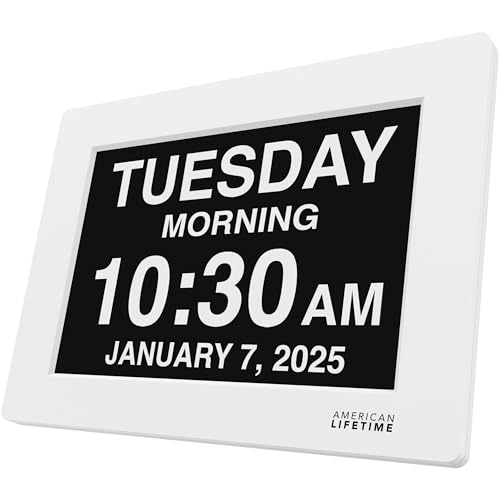
This clock emphasizes a straightforward, high-contrast display with easy setup. It’s a practical choice for daily routines and senior users who want clear visibility of time, day, and date without extra bells and whistles. Best for: users who prefer reliability and simplicity over advanced alarm features. Caution: fewer advanced reminders than some models may require alternative reminders elsewhere.
Lafocuse 12 Inch Day Of The Week Clock

This wall clock prominently displays the day of the week and time with a large 12-inch display. It’s ideal for retirees who want a dedicated wall clock with a day indicator and a quiet, non-ticking movement. Best for: wall-mounted use in living rooms or kitchens where constant visibility matters. Caution: wall mounting is required for optimal use and visibility.
Buying Guide: How To Choose A Day-Of-Week Clock For Seniors
- Display size and readability: Larger screens with high contrast improve visibility for low-vision users. Consider seven to twelve inches depending on room size and viewing distance.
- Day-of-week and date visibility: Look for clear day, date, and month cues with minimal abbreviations. Some models show day phases or icons to aid comprehension.
- Alarms and reminders: Determine the needed number of alarms and whether reminders can be date-specific or task-specific (medication, appointments, hydration).
- Voice and language features: If hearing or cognitive challenges exist, a clock with voice time announcements or multiple language options can be very helpful.
- Brightness control and sleep mode: Adjustable brightness and a sleep/off mode help minimize disruption during the night.
- Power and placement: Consider whether a table-top, countertop, or wall-mounted clock fits best. Battery vs. plug-in power impacts placement flexibility.
- Ease of setup: Simple manuals and intuitive controls reduce the learning curve for seniors and caregivers.
Frequently Asked Questions
- What makes a day-of-week clock good for dementia care? It emphasizes clear day and date information, simple icons, and reliable reminders to support memory and daily routines.
- How large should the display be for easy reading? A display of 7 to 12 inches is typically easiest to read from across a room, especially with high-contrast text.
- Are voice announcements helpful for seniors? Yes, when they help with time-based cues and reduce the need to look at the clock constantly.
- Can these clocks be used on a wall? Several models are designed for wall mounting; others are tabletop-friendly. Choose based on room layout.
- Do all clocks have multiple alarms? Not all models include many alarms. If you need frequent reminders, select a model that supports multiple alarms and reminders.
- Do brightness controls affect night’s sleep? Yes. Use the sleep mode or dimmer settings to minimize light exposure during resting hours.