Answering the need for safer furniture corners, this guide highlights five top options that balance protection with discreet design. These picks suit parents, caregivers, and guardians who want reliable edge protection without sacrificing style. Each product is evaluated for ease of installation, material safety, and how well it blends with different furniture. Below is a quick buying summary to help you compare at a glance.
| Product | Best For | Material/Design | Notable Benefit |
|---|---|---|---|
| CalMyotis Corner Protectors (12 Pack) | Families needing bulk protection | Premium PVC, clear | Near-invisible shield with strong density |
| Wappa Baby Corner Protectors (12 Pack) | Stylish, minimal look | Transparent PVC with patent shape | Balanced protection and aesthetics |
| AIXMEET 8 Pack Corner Protectors | Clear, thick protection | Clear silicone/ PVC blend | Thick, versatile coverage |
| USfloatwishes 12 Pack Corner Guards | Soft, elastic padding | Upgraded NBR material | Soft yet protective |
| Roving Cove Pre-Taped, 4 Large Corners | High-density protection | Heavy-duty rubber foam | Dense, flame-resistant design |
CalMyotis Corner Protectors 12 Pack

Best for: households needing broad coverage on multiple tables. These protectors are designed to be near-invisible while delivering solid edge protection. The density choice aims to absorb impact and resist wear over time.
Why selected: The product emphasizes safety without sacrificing style. It avoids phthalates, BPA, and harmful additives, aligning with parents’ preferences for non-toxic materials. A key strength is its dense PVC composition, which offers robust protection compared with softer, less durable options.
Limitations: Some users may need extra adhesive if furniture surfaces are especially uneven or glossy. For larger tables, consider applying protectors on both top and bottom edges for complete coverage.
Wappa Baby Corner Protectors (12 Pack)

Best for: parents wanting a patent-pending design that improves protection without compromising furniture appearance. The combination of ball-shaped and L-shaped elements helps form a buffer around sharp corners.
Why selected: It blends function with style by using transparent PVC that preserves furniture aesthetics. The design aims to limit the likelihood of little hands tugging guards away and reduces swallowing risk thanks to its unintimidating shape.
Limitations: The installation relies on adhesive fit; if surfaces are dusty or damp, adhesion can be weaker. Allow time to set before putting heavy pressure on corners.
AIXMEET 8 Pack Corner Protectors
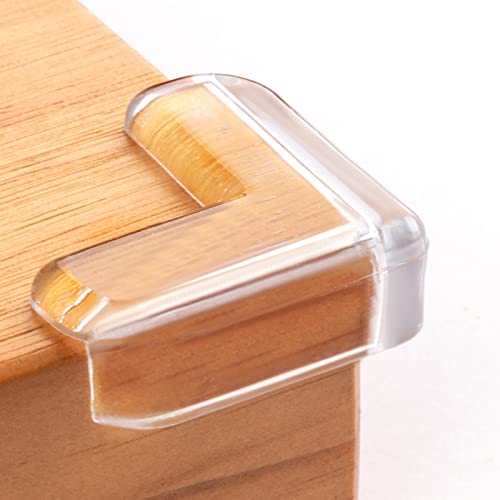
Best for: households seeking a clear, thick, and durable protector that can be used on a variety of furniture surfaces, including curved corners where flat guards don’t fit well.
Why selected: The product uses a thick, natural silicone material, offering a strong barrier against bumps while staying nearly invisible. It’s presented as easy to install and suitable for wood, metal, or glass surfaces.
Limitations: Temperature can impact tape adhesion; warming with a hair dryer before application can help achieve a stronger bond in cooler environments.
USfloatwishes 12 Pack Soft Corner Protectors

Best for: homes prioritizing elastic, cushioned protection with straightforward installation. The NBR material emphasizes softer impact absorption.
Why selected: The set touts pre-taped installation and a focus on wider protection for various furniture edges, reducing risk of head bumps on tables, chairs, and fireplaces.
Limitations: The material is softer, so very aggressive contact over time could compress more than harder guards. Ensure proper placement and avoid placing over very glossy surfaces where tape adhesion may slip.
Roving Cove Corner Protector, Pre-Taped
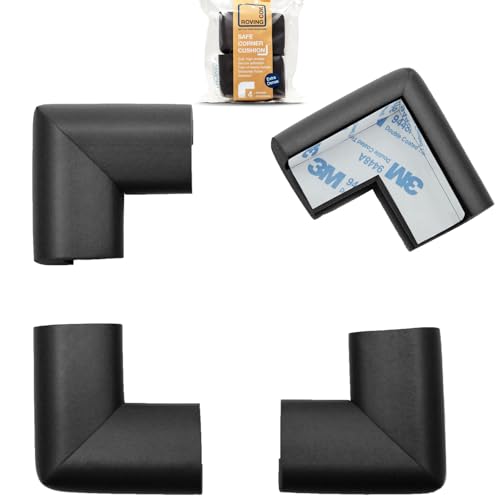
Best for: settings requiring high-density protection and flame-safe materials. This option emphasizes a heavier rubber foam structure for maximum impact absorption.
Why selected: It uses a dense foam that offers superior protection against hard corners in nurseries, living rooms, and common play areas. The product is positioned as flame-resistant and free from common toxins.
Limitations: The pre-taped design may require careful surface prep to ensure long-term adhesion on very smooth or newly refinished wood finishes.
Buying Guide: Key Purchase Considerations
- Material safety: Look for non-toxic, phthalate/BPA-free materials. Dense PVC or high-quality rubber foam generally provides stronger protection than soft silicone alone.
- Installation: Pre-taped backings simplify application, but some environments benefit from surface cleaning and gentle heat to improve adhesion in cooler rooms.
- Guard density and thickness: Higher density often yields better impact absorption. If your furniture includes curved or non-standard corners, consider flexible or shaped designs.
- Aesthetics: Transparent or clear guards preserve furniture appearance. If you prefer a minimal look, choose products described as near-invisible or discreet.
- Area coverage: For larger tables or multiple edge hazards, a bulk pack provides better value and more comprehensive protection.
- Surfaces compatibility: Ensure guards can attach to wood, metal, glass, or lacquered finishes. Some tapes perform poorly on dusty or oily surfaces.
Frequently Asked Questions
- Are corner guards safe for babies who explore with their mouths?
Yes, many options cite non-toxic materials and taste-safe designs to minimize risk if chewed on, though supervision is still advised. - Can corner guards be used on curved edges?
Some models accommodate curved edges better than flat designs; check product descriptions for curvature compatibility. - Do I need adhesive to install corner guards?
Most sets include pre-taped backing for quick installation; some surfaces may require heat or surface prep for better adhesion. - Which guard is best for high-traffic play areas?
Higher-density guards with robust edge absorption tend to perform better in busy spaces like living rooms and playrooms. - Can corner guards damage furniture finish?
When applied correctly and not left on for excessive periods, most guards are designed to be gentle and removable without residue. - Is it better to use multiple guards on a single table edge?
For larger or higher-risk furniture, applying guards on both the top and bottom edges can provide fuller protection.